
Excess Stock Clearance Australia | Your Options Explained
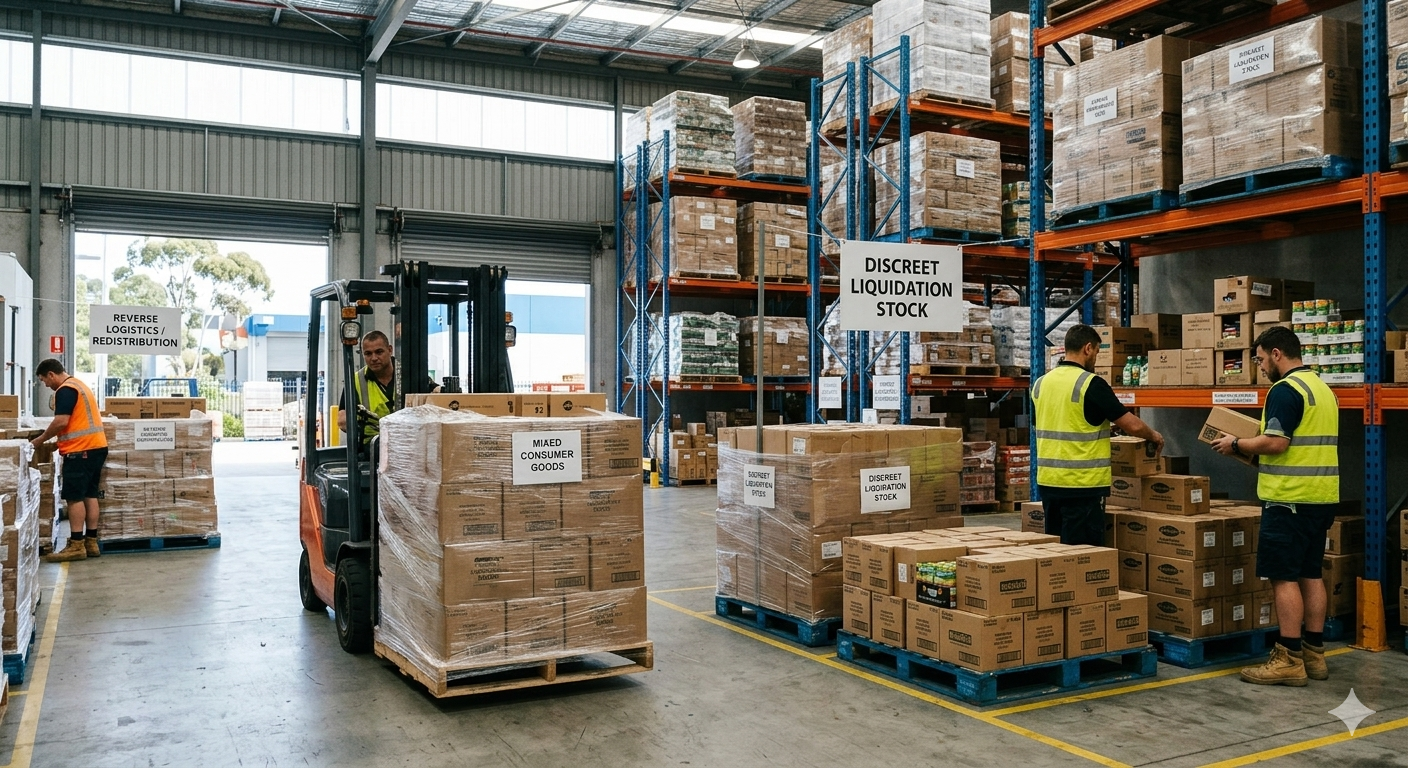
Got excess stock in Australia? Here are your practical clearance options: what each one involves, what it recovers, and when to use it.
TL;DR: Australian suppliers have four main options for clearing excess stock each with different speed, recovery, and brand-risk profiles. Choosing the right one depends on your timeline, your category, and how much control you need over where your stock ends up.
Excess Stock Clearance Australia: What Are Your Options as a Supplier?
Four options. Here they are, straight.
Excess stock clearance in Australia isn't a one-size-fits-all decision. The right route depends on what you're holding, how much time you have, and what a bad outcome actually costs your business. Get the match wrong and you either leave money on the table or create a brand problem that outlasts the clearance event. Here's how each option works.
Option 1: Liquidation Through a Specialist Broker
This is the most structured route. A stock liquidation specialist comes in, assesses what you've got, segments it by category and condition, and moves it through an established buyer network. Not a single buyer, multiple buyers, competing for your product. That competition matters more than most suppliers realise.
Recovery value tends to be the strongest here, particularly if you're not under acute time pressure. When buyers are competing, prices get pushed up from the floor rather than down from your ask. That's a meaningful difference.
Best for significant volumes of FMCG, grocery, or branded general merchandise where brand protection matters and handing everything to one direct buyer creates too much risk. Worth noting this isn't an instant solution. A structured liquidation takes a few days to set up properly. But that setup time is exactly what produces the better outcome.
Option 2: Direct Sale to a Discount Buyer
Faster to kick off. Simpler to execute. And almost always the lowest-recovery option of the four.
When you go direct to a single buyer, you remove the competition that keeps prices honest. The buyer knows they're the only call you've made and the offer they put forward reflects that. We've seen suppliers accept direct offers that were well below what the same stock fetched through a multi-buyer process. Not because the buyer was being dishonest. That's just how single-buyer negotiations work. You've already shown your hand.
Best for small volumes, categories where brand exposure is low, or situations where speed genuinely has to win over recovery.
Option 3: Reverse Logistics and Channel Redistribution
Not every excess stock situation needs the stock to leave your supply chain entirely. If you're holding an overstock that's in solid condition and well within date, redistribution through alternate retail or wholesale channels can recover near-full value without the discount that liquidation implies.
This is as much a reverse logistics decision as it is a clearance one. It needs a partner who can properly assess stock conditions, identify the right channels, and physically manage the movement. For a full breakdown of how this fits into the clearance picture, the What Is Reverse Logistics guide covers the process end to end.
Best for premium branded stock where discounting would create visible price tension with your existing retail relationships.
Option 4: Write-Off and Disposal
This is what happens when businesses don't act. Stock that isn't cleared eventually reaches a point where no buyer channel will touch it date-expired, damaged, or too far past its commercial window to move.
Disposal is sometimes the right call. For genuinely unsalvageable stock, it's the only call. But for the vast majority of excess stock clearance situations in Australia, disposal is value destruction that a proper clearance process would have avoided.
And here's the thing most suppliers don't want to hear: most write-offs aren't inevitable. They're the result of waiting too long to make a decision.
Which Option Is Right for Your Stock?
The short version:
Volume is significant and brand matters: go with a specialist liquidation broker. Speed is the only priority and brand risk is low. Go directly to a buyer. Stock is in great condition with healthy dates and look at redistribution through reverse logistics. Stock is genuinely unsalvageable; disposal is your only move.
For specific questions about how Stock Solutions handles each of these scenarios minimum quantities, categories, timelines, and process the FAQ hub answers the most common supplier questions directly.
People Also Ask
What is excess stock clearance in Australia? Excess stock clearance is the process of moving surplus, overstock, or end-of-line inventory out of a warehouse through sale, liquidation, or redistribution, recovering cash value before the stock declines further. In Australia, specialist brokers manage this process for FMCG, grocery, and general merchandise suppliers across national buyer networks.
How quickly can excess stock be cleared in Australia? It depends on the category, volume, and route chosen. High-demand categories branded FMCG, grocery, general merchandise in good condition can move within days through an established buyer network. A specialist clearance partner will give you a realistic timeline after an initial stock assessment. Rushing without that assessment usually costs recovery value.
Does clearing excess stock damage my brand? It can if the wrong channels are used. Excess stock that appears in visible discount retail at prices below your standard trade terms creates price tension with your existing retail partners. A specialist stock liquidation broker controls where stock goes, moving it through buyer networks that don't cannibalise your core market. Brand protection is a core part of a well-managed clearance.
Not Sure Which Clearance Option Fits Your Situation?
Start with a conversation. Stock Solutions works with Australian suppliers to assess stock, recommend the right clearance route, and execute it without the write-off or the brand risk.
Let's Talk Stock? Get in Touch Today
