
Stock Clearance vs. Stock Liquidation: What’s the Difference?
TL;DR: Stock clearance is a front-facing retail strategy used to move slow items to your existing customers. Stock liquidation is a back-end supply chain solution that moves bulk, problematic volume completely out of your primary market through a specialist network.
If you are holding excess inventory in your warehouse, you need it gone. But how you choose to move it determines how much cash you recover and whether you accidentally damage your brand in the process.
Two terms are constantly thrown around in the supply chain world: stock clearance and stock liquidation. While they sound identical on paper, they represent entirely different strategies, channels, and financial outcomes.
Here is exactly how they differ and how to choose the right path for your business.
What is Stock Clearance?
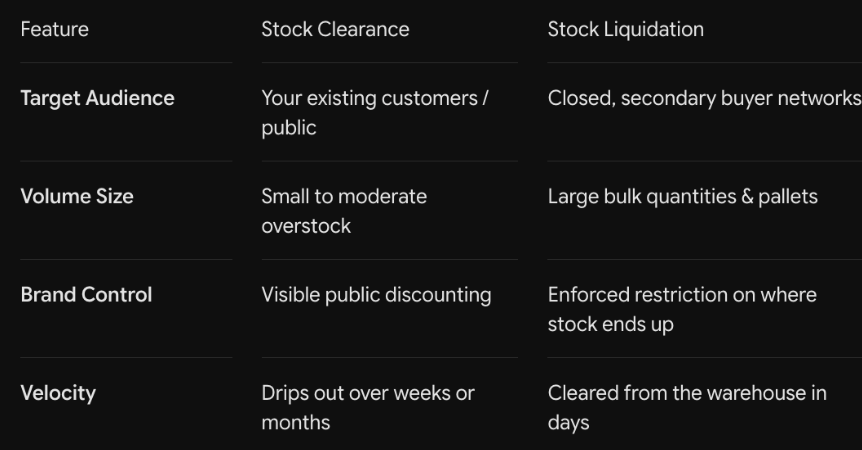
Stock clearance is typically a front-facing, internal retail strategy. It is the process of discounting slow-moving or end-of-season inventory directly to your existing customer base or through your established retail channels.
The Goal: To free up shelf space or warehouse slots for incoming seasonal lines.
The Execution: You maintain control of the sale. Think "End of Financial Year" events, flash sales, or on-page markdowns.
When it Applies: This is a supporting term and an excellent option for minor overstocks or standard seasonal transitions. It belongs in your day-to-day page copy and FAQ strategies rather than as a standalone emergency process.
What is Stock Liquidation?
Stock liquidation is a back-end corporate solution designed for bulk, urgent, or problematic inventory that cannot or should not be sold to your regular customers.
When you enter a formal stock liquidation process, you work with a specialist broker to sell large volumes of stock to a closed network of secondary buyers such as discount wholesalers, corporate barter firms, or independent exporters.
The Goal: Immediate capital recovery and total warehouse relief for major asset blocks.
The Execution: The inventory is completely removed from your primary supply chain to ensure it never cannibalizes your core retail relationships.
When it Applies: This is your primary strategy for major brand changes, product reformulations, massive distribution center cleanouts, or short-dated grocery lines.
The Core Differences at a Glance
How to Choose the Right Strategy
Choosing between these two paths comes down to a simple assessment of your volume and your brand risk.
Choose Stock Clearance if:
You only have a few pallets or cartons of a slow-moving SKU.
Publicly discounting the product won't upset your major retail partners.
You have the time to let the stock sell down naturally over a few weeks.
Choose Stock Liquidation if:
You are sitting on significant volume that is suffocating your warehouse capacity.
Selling the items cheaply online would destroy your premium brand positioning or violate trade agreements.
You need a guaranteed, single-transaction cleanout to recover cash immediately.
Need a Structured Warehouse Cleanout?
If your inventory has outgrown a simple promotional sale, a structured liquidation keeps your brand safe while maximizing cash return.
At Stock Solutions, we specialize in helping Australian suppliers navigate complex inventory challenges. Explore our tailored excess stock clearance solutions to see how we safely redirect bulk inventory through secure secondary channels, or reach out to our team today to request a rapid stock assessment.
