
Surplus Grocery and FMCG Stock: How Suppliers Clear Lines Without Brand Damage
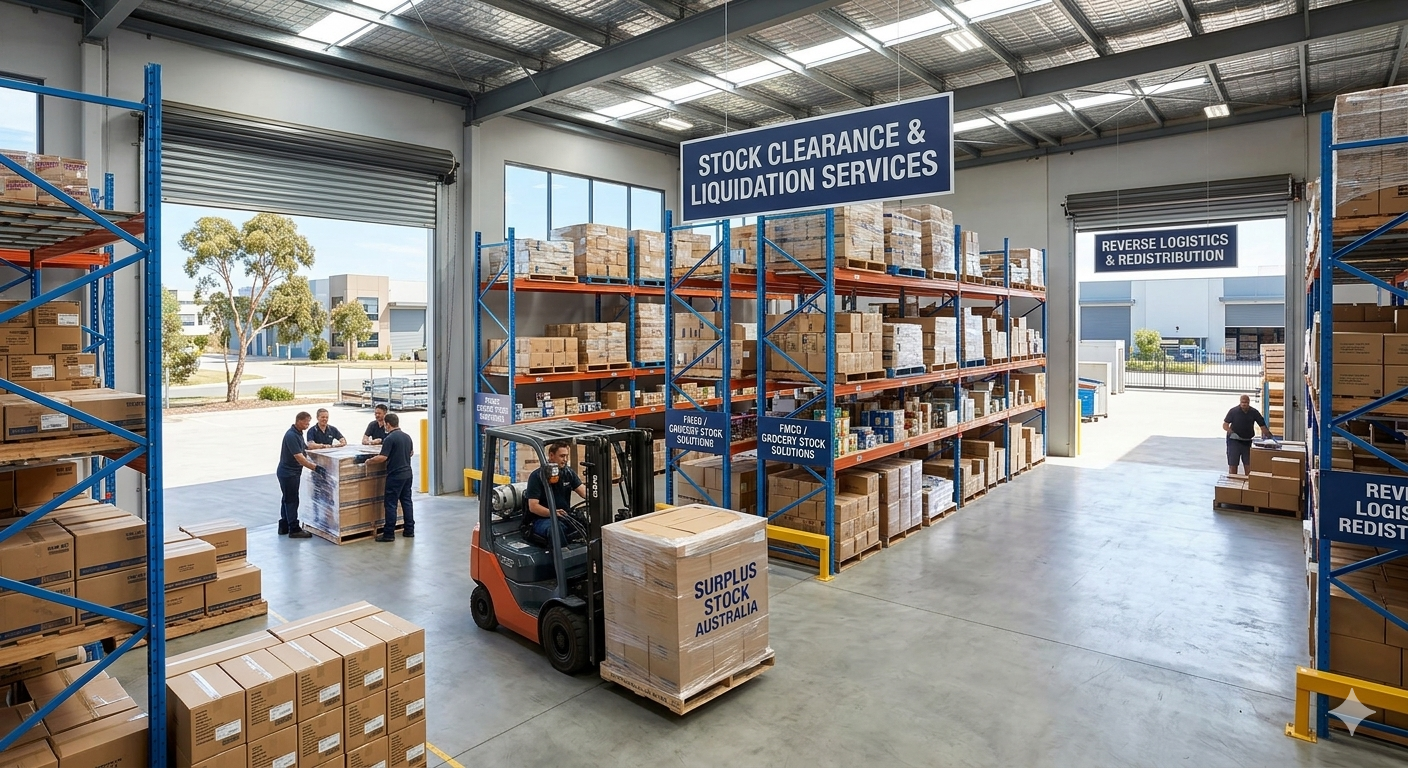
TL;DR: Clearing surplus FMCG or grocery stock in Australia requires strict channel control. To avoid upsetting major supermarket partners, suppliers must bypass public discount channels and route excess inventory through closed, secondary buyer networks.
For fast-moving consumer goods (FMCG) and grocery suppliers, inventory management is a high-stakes race against the calendar. Best-before dates tick down, packaging designs change, and promotional forecasts don't always match actual supermarket scan data.
When you find yourself holding a significant volume of surplus stock, the pressure to clear warehouse space is intense. However, a reckless clearance move can easily inflict long-term damage on your brand. If your premium product suddenly surfaces on a discount shelf or public online marketplace at a fraction of its standard trade price, it creates immediate, severe price tension with your core retail partners.
Fortunately, there is a proven playbook for clearing bulk grocery inventory safely. Here is how leading Australian suppliers protect their brands while recovering valuable working capital.
1. Avoid the Trap of the Public Markdown
When dealing with a minor overstock, using on-page copy, bundle deals, or standard stock clearance strategies on your own channels is perfectly fine.
But when you are holding pallets of bulk inventory, public discounting is dangerous. Major Australian retail chains monitor the market closely. If they see your products heavily discounted in public secondary channels, it undermines your category positioning and complicates future trade negotiations. For true FMCG volume, the clearance process must happen completely behind closed doors.
2. Enforce Strict Channel Restraints
The secret to brand protection during an FMCG clearance event is channel control. You need absolute certainty regarding where your stock will land.
Professional inventory partners don't just sell to the highest bidder; they utilize highly restricted, secondary buyer networks. This includes routing stock to:
Independent regional retailers
Corporate catering and hospitality providers
Closed-loop staff discount stores
Approved export markets entirely outside of Australia
By restricting the inventory to these specific segments, you ensure the products are quietly consumed without cannibalizing your primary domestic supermarket sales.
3. Move Before the Date Becomes Critical
The financial recovery curve for surplus groceries drops off sharply as products near their expiry dates.
The 3-to-6-Month Window: This is the sweet spot. Buyers across secondary networks are highly competitive for branded FMCG items with healthy dates, driving up your recovery value.
The Last-Minute Window: If you wait until a product has less than a month of shelf life, your options vanish. At that point, you risk a total write-off and expensive commercial disposal costs.
Proactive decision-making is the ultimate form of brand protection. The faster you act, the more control you retain over the distribution process.
Protect Your Brand and Clear Your Warehouse
Managing surplus grocery and FMCG inventory doesn't have to mean compromising your hard-earned retail relationships or taking an outright loss.
At Stock Solutions, we specialize in helping Australian suppliers discreetly and efficiently move bulk inventory. We enforce strict brand protections so you can free up capital without disrupting your primary market.
Have questions about our process, accepted categories, or minimum pallet quantities? Check out our comprehensive FAQ hub for fast answers, or contact Stock Solutions today to get a confidential assessment of your stock.
