
Liquidation Stock for Sale in Australia: How the Buying Process Works
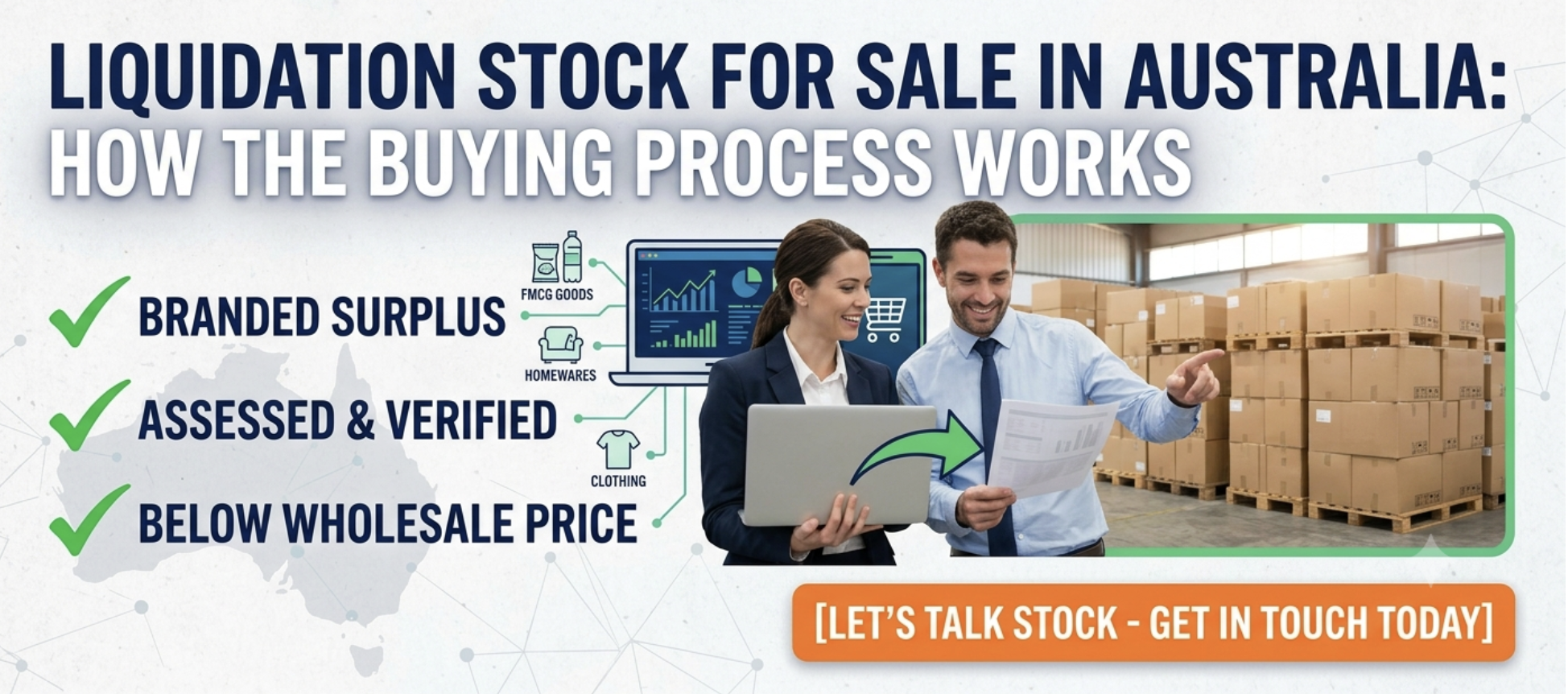
If you're sourcing liquidation stock in Australia for the first time, the process isn't what most people expect.
It's not an auction. It's not a warehouse full of unsorted mystery pallets. And it's not a single transaction; it's a sourcing relationship that, done right, gives your business consistent access to branded product at margins your competitors buying through normal wholesale channels can't easily match.
Here's exactly how it works.
What Liquidation Stock Is Actually Available in Australia?
More than most buyers realise. The liquidation stock market in Australia draws from a wide range of supplier situations, with each producing different product types and conditions:
FMCG and grocery surplus: Overstock, promotional carryover, or short-dated lines from national suppliers.
General merchandise: Branded homewares, sporting goods, seasonal product, cleaning, and household items.
Health and beauty: Cosmetics, personal care, and wellness product at below-wholesale prices.
Apparel and accessories: End-of-line clothing and footwear at wholesale volumes.
Cancelled order stock: Product manufactured or imported for an order that didn't proceed, often in pristine condition.
The common thread: this is real branded product with genuine commercial value. It's surplus because the supplier's circumstances changed, not because the product is defective or unsaleable.
How Do You Source Liquidation Stock Through a Broker?
Through Stock Solutions, the process is direct.
Step 1: Tell us what you're looking for. Specify your target category, volume, and any unique product requirements. We match buyer needs to stock as it comes through our supplier network. Knowing what you're actively sourcing means we can contact you the moment the right parcel becomes available.
Step 2: Stock assessment. Every parcel that comes through Stock Solutions is fully assessed before it reaches buyers. We verify condition, quantity, dating (where relevant), and category alignment. You're never sorting through unseen product hoping for value; you know exactly what you're buying before you commit.
Step 3: Pricing and offer. Liquidation stock is priced below wholesale, creating a healthy margin gap for buyers. Pricing reflects the specific category, condition, volume, and current market demand. Buyers who move quickly on available stock consistently secure the best pricing.
Step 4: Movement and logistics. Stock is collected or delivered depending on volumes and logistics. Stock Solutions coordinates the movement, ensuring the buyer receives the stock in the exact condition and quantities confirmed during the assessment stage.
What Should Buyers Look for in a Liquidation Stock Supplier?
Three things separate a reliable liquidation stock source from a problematic one.
1. Provenance
You should know where the stock came from, why it's in the liquidation market, and who the original supplier was (at least at a category level). Stock with clear provenance is tradeable stock. Mystery pallets with no origin story present a compliance and reputational risk.
2. Condition Verification
A reputable broker assesses stock before it reaches buyers. If you're being offered liquidation stock for sale with no condition information, no dating confirmation for food and health categories, and no way to verify what you're buying, that's a red flag rather than a bargain.
3. Consistency of Supply
One parcel is a transaction. A relationship with a specialist broker is a sourcing channel. The buyers who get the most value from liquidation stock in Australia are the ones who establish an ongoing supply relationship, not those chasing one-off deals.
For more on what Stock Solutions offers buyers specifically, our Buy Liquidation Stock Australia page covers categories, processes, and how to enquire. Common buyer questions are also answered directly in our emails/ Want to learn more about retail strategies? Contact us now.
People Also Ask
Is it legal to buy and sell liquidation stock in Australia?
Yes. Buying and selling liquidation stock is entirely legal in Australia. Stock purchased through a reputable broker comes with full provenance: origin supplier, condition assessment, and compliance verification for regulated categories. Buyers should ensure they are sourcing through a legitimate broker rather than unverified channels, particularly for food, health, and regulated product categories.
How much below wholesale is liquidation stock priced?
Pricing varies by category, condition, volume, and timing. Liquidation stock in high-demand categories (like branded FMCG, grocery, and general merchandise in good condition) typically moves at a meaningful discount to standard wholesale pricing, supporting strong buyer margin. Short-dated or high-volume parcels may move at deeper discounts. The best way to understand current pricing is to register your buying interest with a specialist broker.
Can small retailers buy liquidation stock in Australia?
Yes. While some liquidation parcels are priced for wholesale volumes, specialist brokers like Stock Solutions work with buyers across a range of scales, from independent retailers sourcing single-category parcels through to large-volume wholesale buyers. The key is communicating your volume requirements and category interests upfront so stock can be matched appropriately.
Looking for Liquidation Stock to Source Regularly?
Stock Solutions works with Australian retailers and wholesale buyers to provide consistent access to quality branded surplus that is assessed, verified, and priced for buyer margin. Tell us what categories and volumes you're looking for.
