
Surplus Grocery and FMCG Stock: How Suppliers Clear Lines Without Brand Damage
Nobody talks about the clearance that went wrong.
The supplier who moved a significant volume of surplus grocery stock quickly ticked that box, cleared the warehouse, reported the write-down as smaller than expected, and then spent the next six months fielding calls from their major retail partners asking why their product was sitting on a discount shelf at 40% below trade price.
We've had that conversation at Stock Solutions more than once. Every time, the supplier says the same thing: "We just needed it gone."
That instinct, the need to move fast and close the problem, is exactly what creates a bigger one.
Why FMCG Brand Damage Happens During Stock Clearance
The mechanics are straightforward. Surplus FMCG stock moved to the wrong buyer ends up in the wrong channel. The wrong channel means a discount retailer with a national or regional footprint, visible pricing, and no particular incentive to keep your product away from the eyeballs of your existing retail partners.
Your major grocery account sees your product on a competitor's shelf at a price that undercuts what they paid for it last month. Now you have a ranging conversation you didn't plan for, a promotional funding negotiation that went sideways, and a buyer who is, at best, sceptical about your pricing integrity going forward.
The surplus stock moved. The problem didn't.
What Controlled FMCG Stock Clearance Actually Looks Like
Here's what a well-managed grocery surplus clearance does differently. It starts with the buyer network, not the stock.
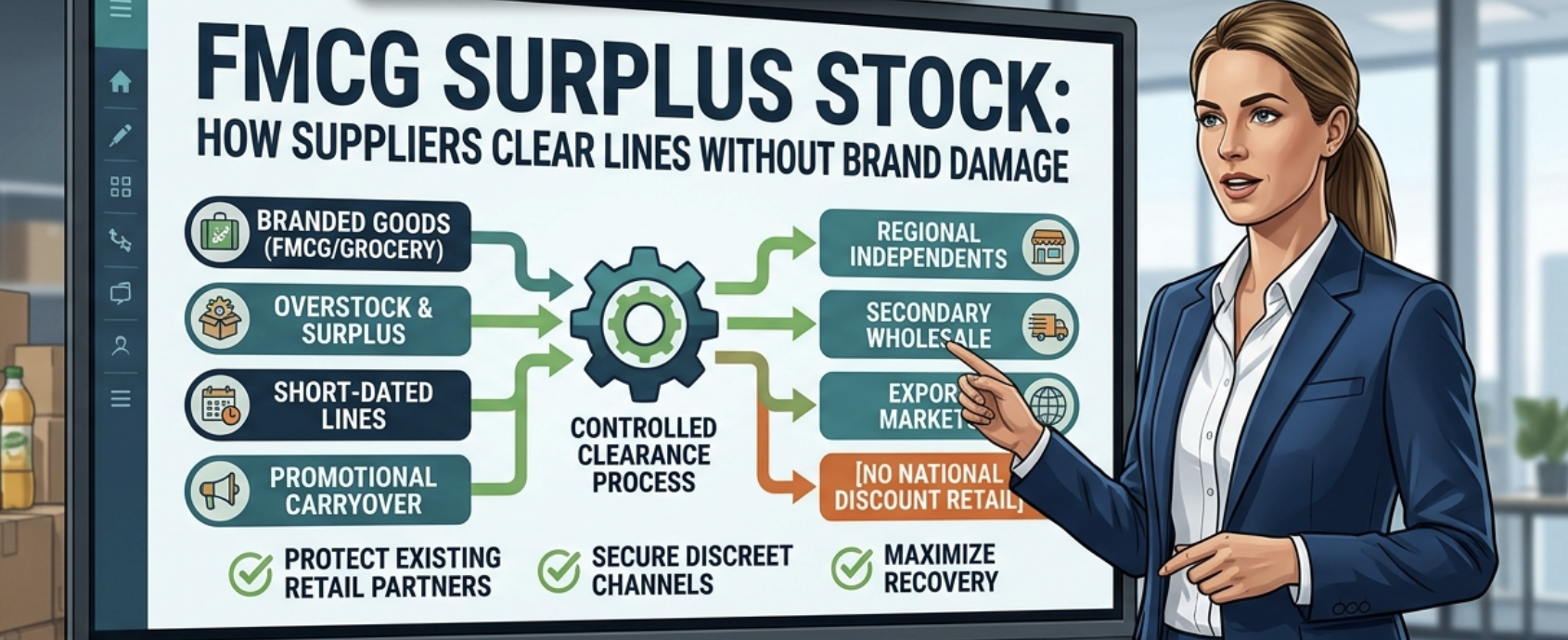
Before a single pallet moves, the right clearance partner asks: which buyers are appropriate for this brand in this category? Not who will take it, but who should take it. The distinction matters. Regional independents, export buyers, and secondary wholesale channels can absorb significant FMCG surplus volumes without creating the price visibility that national discount retail does.
A grocery supplier we worked with at Stock Solutions had a substantial volume of promotional carryover, specifically a well-known branded range in excellent condition with healthy dating. The temptation was to move it quickly through the first buyer who responded. Instead, we segmented the parcel, identified three buyer channels that operated completely outside the supplier's primary retail market, and moved the stock simultaneously across all three.
The stock cleared in under two weeks. The supplier's major retail account never saw the product at a discounted price. There was no ranging conversation and no awkward call from a category manager. Just a cleared warehouse and a recovery that came in above the initial single-buyer quote.
The Question Every FMCG Supplier Should Ask Before Clearing Stock
Do not ask, "How fast can we move this?" Ask it differently: "Where will this product be visible, and to whom?"
If you can't answer that question about your clearance partner's buyer network, you don't have enough information to make the decision. A specialist stock liquidation broker should be able to tell you, specifically, which categories of buyer your stock will reach and which it won't.
If the answer is "whoever offers first," that's not a clearance strategy. That's a brand risk waiting to activate.
Our [excess stock clearance guide] covers how a controlled clearance process works and what to look for in a clearance partner. For further industry reading, explore our [FMCG Excess Inventory Guide] or learn why protecting your bottom line matters in [Surplus Stock: Don't Lose Money]. For FMCG-specific questions regarding categories, minimum quantities, and timing, the [FAQ hub] has direct answers.
People Also Ask
How do I sell surplus grocery stock without damaging my brand?
Work with a stock liquidation specialist who controls buyer channel access, not just buyer volume. The brand risk comes from surplus product appearing in retail environments your existing partners can see. A broker with a segmented buyer network moves surplus FMCG stock through channels that don't create price visibility in your primary market.
What happens to surplus food stock in Australia?
Depending on condition and dating, surplus grocery stock moves through discount wholesale buyers, independent retailers, export channels, or, for genuinely unsalvageable product, responsible disposal. A specialist clearance partner assesses each parcel and routes it to the most appropriate channel. The goal is maximum recovery without brand exposure.
Can short-dated grocery stock still be sold in Australia?
Yes, short-dated FMCG stock in good condition with genuine remaining shelf life has an active buyer market in Australia. The buyer pool narrows as dates tighten, so earlier clearance consistently produces better recovery. Stock approaching but not past its best-before date is not unsaleable; it simply requires the right buyer channel and timeline.
Got FMCG Surplus That Needs to Move Cleanly?
Stock Solutions works with Australian grocery and FMCG suppliers to clear surplus lines quickly, discreetly, and through buyer channels that protect your brand positioning. Start with a stock assessment today.
